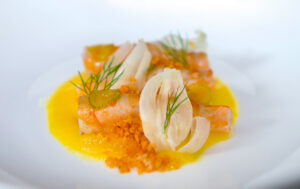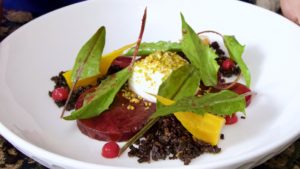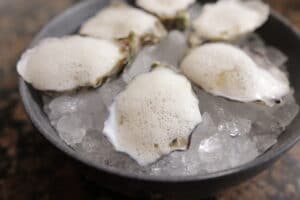
One of the biggest challenges I hear from my coaching students is that they struggle to get all of their prep finished in time for service when making a multi-course meal. As someone who has cooked professionally, I can attest that everyone struggles with this at some point. One of the biggest changes I noticed when I started working in Michelin-starred restaurants was that the best cooks all took five minutes to plan before they started. If you are cooking a menu or dish for the first time, it is helpful to be as detailed as possible. Once you have cooked that same menu or dish a couple of times, it starts to become much easier to do.
I teach my students to plan out their prep list into three stages. Done ahead tasks, day of tasks, and à la minute tasks. This is the same way I planned out my prep for myself when I worked at The Modern and Addison, except in restaurants, you are not typically cooking all new dishes for the first time. The best thing about planning this way is that it doesn’t matter if you are cooking one dish or ten. You set up your work the same way, except ten dishes are a lot more work! You will first have to group all of your tasks into one of three categories.
Done-ahead tasks
These are components that either have a long process (stocks, dry aging, etc.) or are part of a multi-step process that requires some downtime (ice cream, making demi glace, etc.) and need to be done the day or days before. This will be the smallest list, but I like to do as much here as possible, as long as it does not negatively affect the quality of the food.
Day of tasks
These are tasks that you will need to have done before cooking the dish or meal. Typically, I like to front-load my day so that I can knock out the larger task first (Filleting/portioning fish, breaking down protein, etc.). I also like to bunch similar tasks together ( Filleting fish, cleaning oysters). You lose a lot of time switching tasks and resetting a new station. The fewer times you have to set up and break down a work station, the better. I also like to leave components that will be stored warm (sauces, warm purees, etc.) or will have their quality affected negatively if made too soon (Avocado puree, diced apple, etc.) as latter tasks.
The day of tasks is where a majority of the work will be, so I like to break these tasks up into one hour blocks. I also have the workload lighten as I go. More than likely, you will be a little behind, tired, or both, so having your day get easier rather than harder is nice.
À la minute tasks
In a restaurant, we call this service time. You are preparing the other task ahead of time in order to make cooking and plating your dishes as efficient as possible. If you are serving a warm dish, your goal here is to cook or reheat all the components so they are ready at the same time. I like to order the tasks in a way that will allow me to have them all ready at the same time. I will also list out the plating steps so that I know what order, how many of each component, and location on the plate, but I will talk more about this when I cover plating in one of the upcoming emails.
Mise en Place List
Once grouped into one of the three categories, here is how I create the list to follow. I will write a time estimate next to “done ahead” and the “day of” tasks. I always allot for set up and clean up time, and try to allow extra time rather than less. Once I have time estimates, I will group the day of tasks in one-hour chunks and put similar tasks together (Fillet fish, make farce, stuff fish, clean oysters).
You will now have a by-hour prep list that will help you navigate the work needed for your menu. This will help you work through your menu efficiently, and once you have done it a couple of times, it becomes second nature.